What Is a Nylon Tube Clamp?
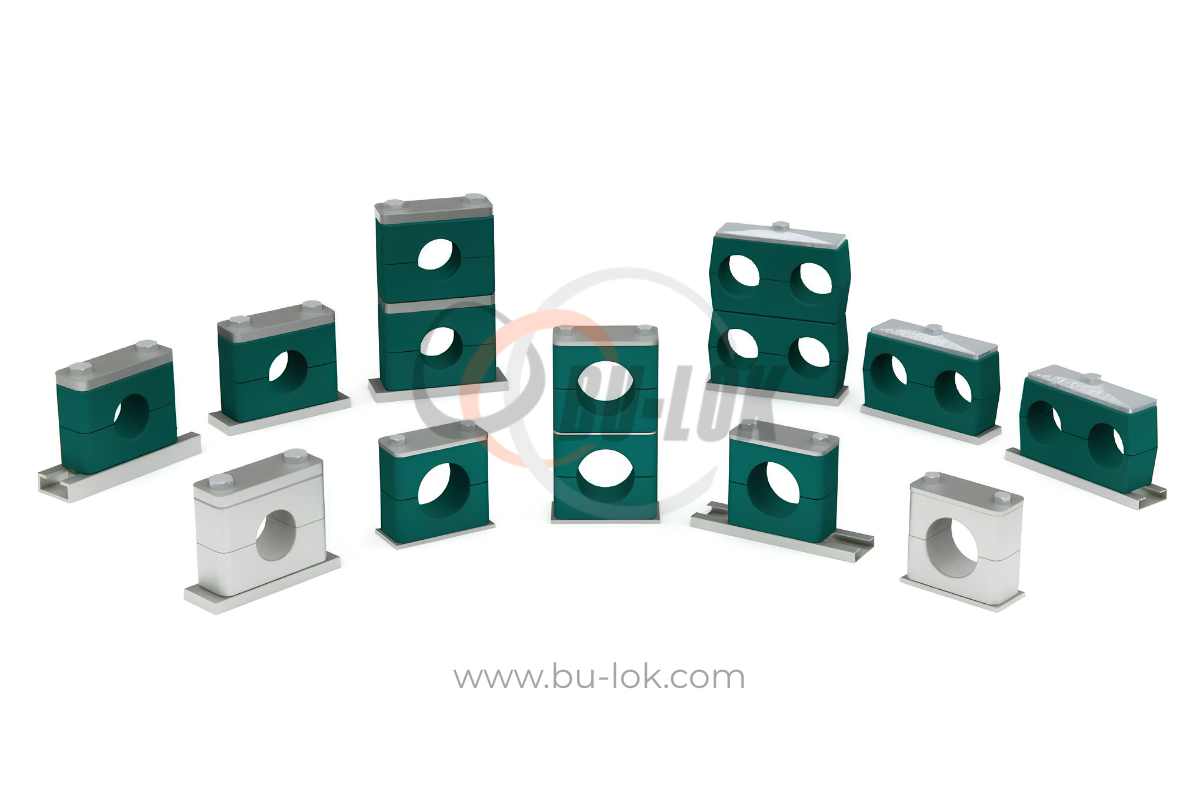
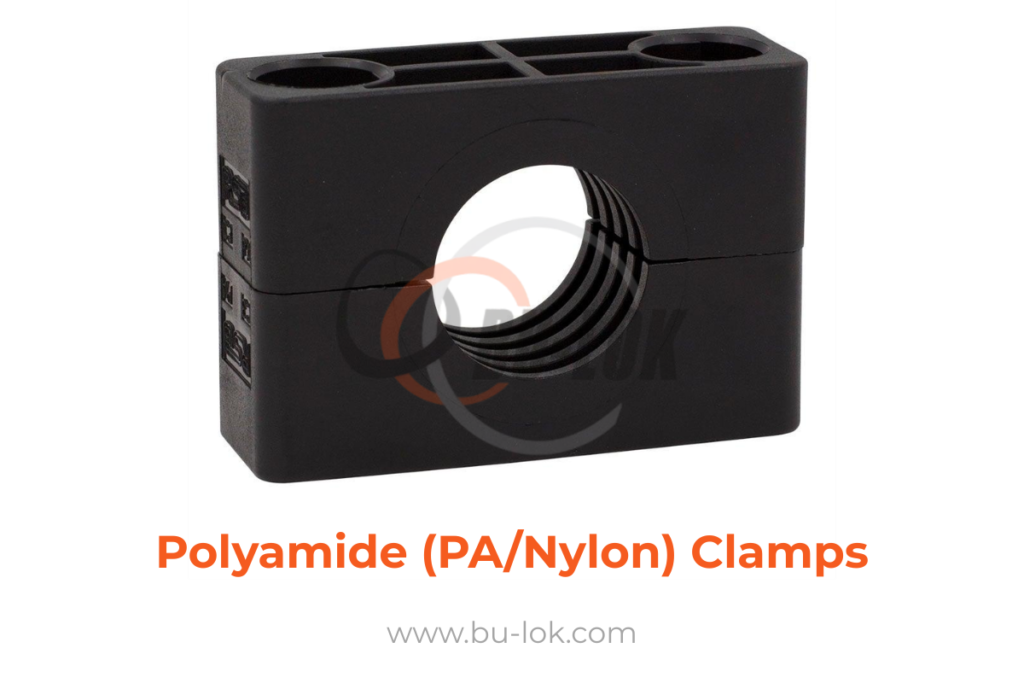
A nylon tube clamp is a tube support clamp whose body is moulded from nylon — the everyday name for the engineering plastic polyamide (PA). It grips a tube to full circumference, anchors it to a structure and damps the vibration travelling through a pressurised line, just like any DIN 3015 clamp. What sets the nylon body apart is its toughness: it tolerates higher temperatures, absorbs heavy impact and resists abrasion far better than a standard polypropylene clamp.
Nylon clamps are the body of choice for hard-working equipment. On excavators, loaders, drilling rigs and other machines that run hot, vibrate constantly and operate in dirty, abrasive conditions, the nylon body survives duty cycles that would wear or fatigue a softer clamp. Its black colour is the quick visual identifier on site.
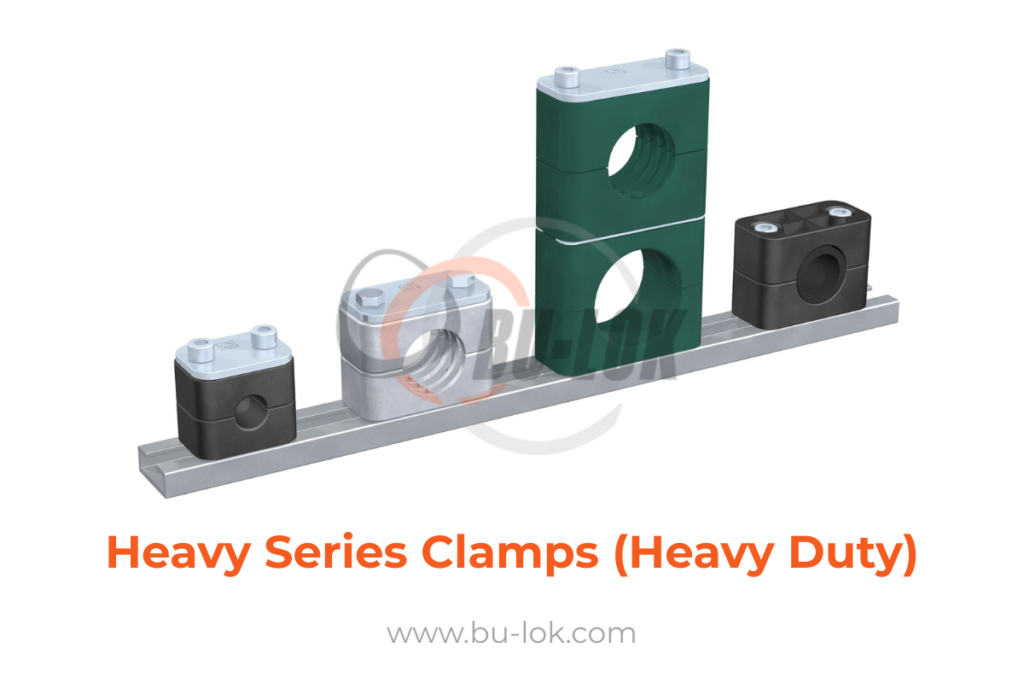
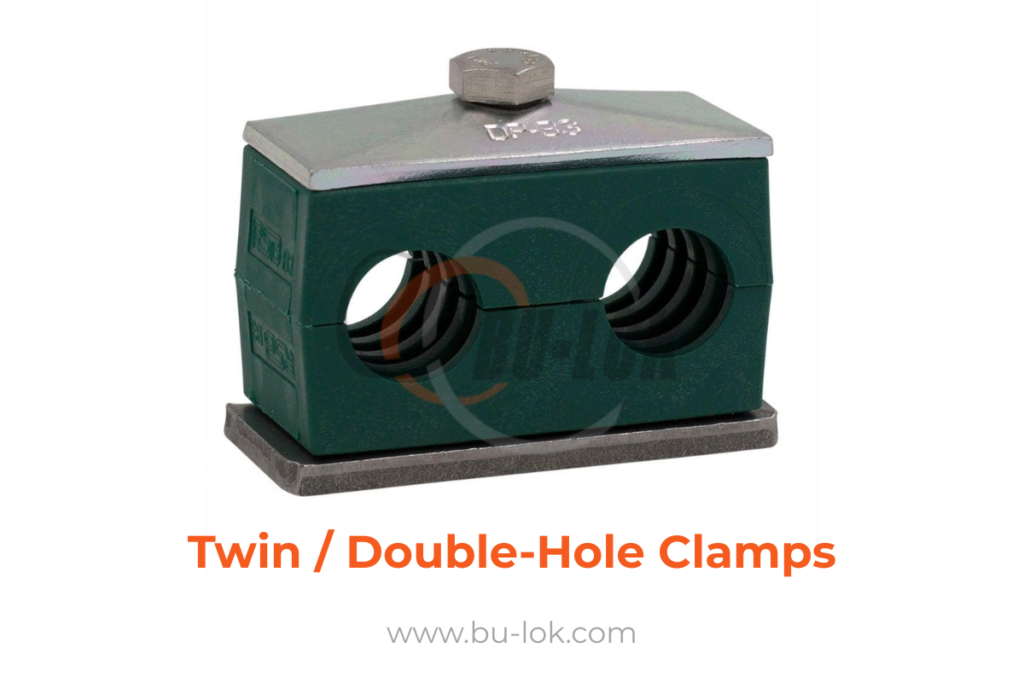
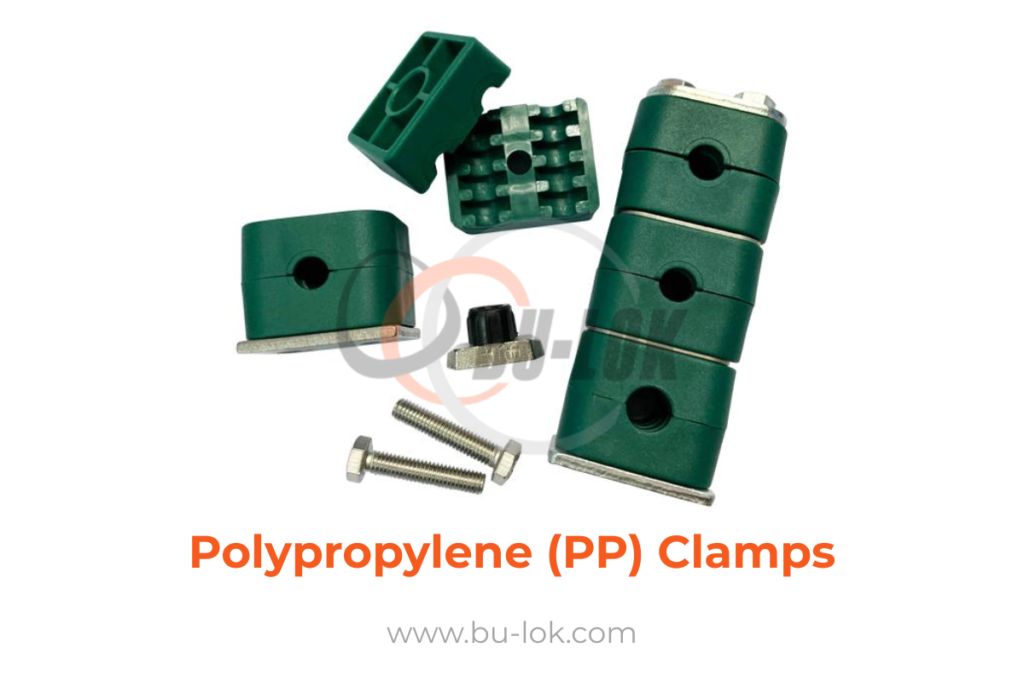
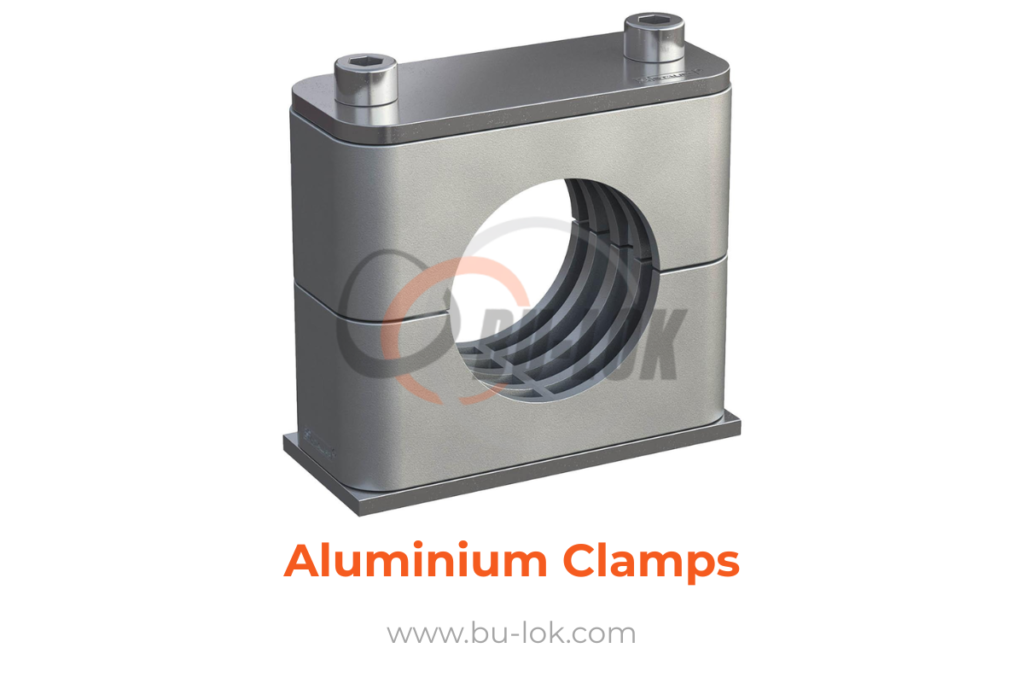
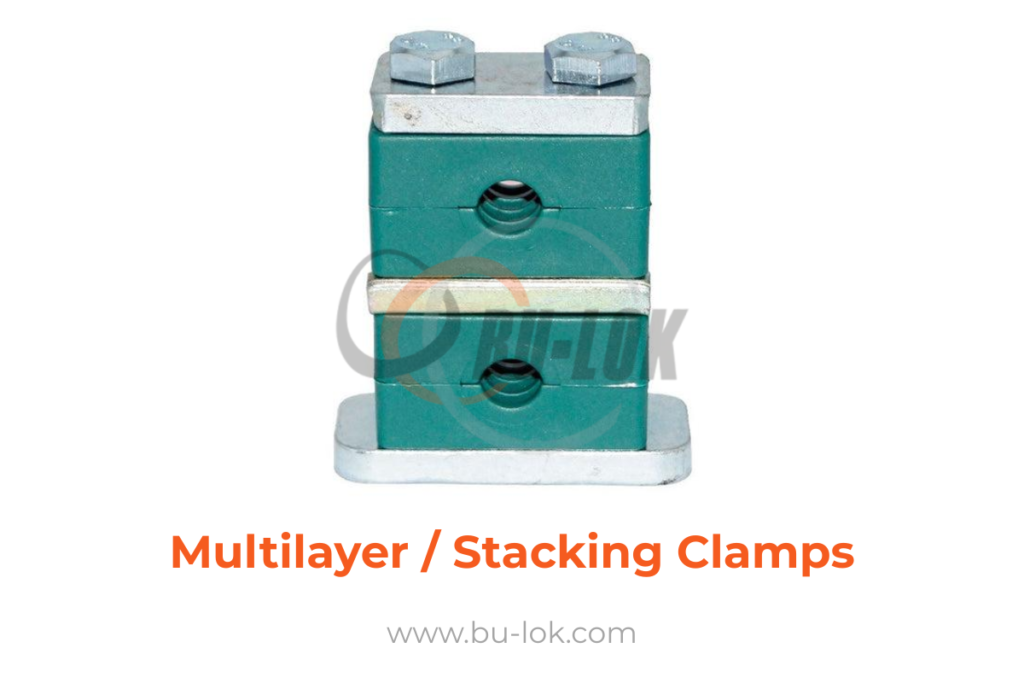
A nylon tube clamp is built from the same DIN parts as every clamp — two clamping halves, a weld or mounting plate, a cover plate and a hex bolt — and follows DIN 3015 dimensions. That means it drops straight into the same layouts and rails as polypropylene, aluminium and stainless clamps, so engineers fit nylon where its strength is needed and standard clamps elsewhere.
Is Nylon the Same as Polyamide?
Yes — and it is worth stating plainly, because buyers and datasheets use both words. “Nylon” is the familiar trade name; “polyamide” (PA) is the technical material name. They refer to the same plastic.
Term used | What it means |
Nylon tube clamp | Clamp with a nylon body |
Polyamide (PA) clamp | Same clamp — “polyamide” is the technical name |
PA 6 / PA 66 | Specific polyamide grades used for clamp bodies |
Glass-filled nylon (PA-GF) | Reinforced grade for higher strength and temperature |
So a nylon tube clamp and a polyamide tube clamp are identical products. Bu-Lok manufactures them to original DIN 3015 dimensions, so they are interchangeable with the PA/nylon clamps from STAUFF, Parker and Swagelok no matter which name your drawing or purchase order uses.
Why Nylon Is Used for Tube Clamps
Nylon is chosen wherever a clamp must be tougher and more heat-tolerant than ordinary polypropylene:
- High strength under load — it holds the tube firmly without deforming, even under heavy clamping force.
- Impact resistance — it shrugs off knocks, drops and sudden shock loads without cracking.
- Heat tolerance — it works at temperatures above the polypropylene limit, suiting hotter hydraulic and lube lines.
- Abrasion and wear resistance — it withstands grit, debris and rubbing in rough outdoor settings.
- Oil and fuel resistance — it performs strongly against hydraulic oils, mineral oils, greases and hydrocarbons.
- Fatigue endurance — it survives continuous high-frequency vibration and load cycling.
These properties make nylon the standard clamp body for mobile hydraulics and heavy equipment — the hot, dirty, high-vibration work that defines off-highway machinery.
Bu-Lok Nylon Tube Clamps at a Glance
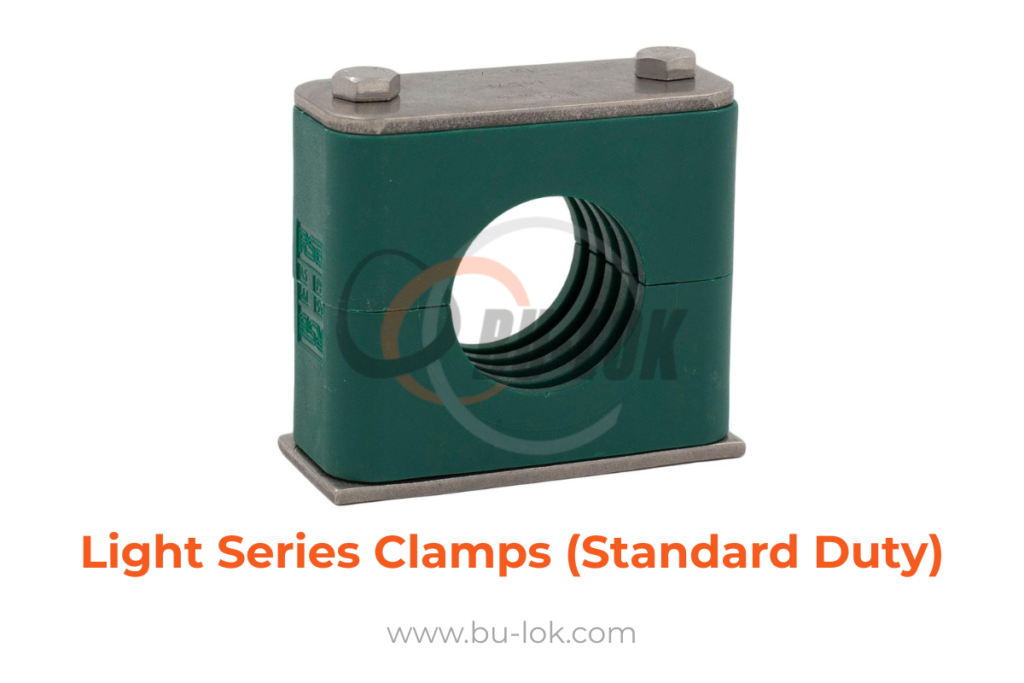
Bu-Lok manufactures nylon (PA) clamps across the full DIN 3015 range, so one supplier covers every heavy-duty position on your layout.
Specification | Bu-Lok Nylon Tube Clamp |
Standard | DIN 3015 Part 1 (light), Part 2 (heavy), Part 3 (twin) |
Body material | Nylon / polyamide (PA) — black |
Grades | Standard PA and glass-reinforced PA-GF (on request) |
Tube OD range | 6 mm to 219 mm (1/4″ to 8″) |
Cover & weld plate | Mild steel (zinc trivalent / A3C) or Stainless Steel 304 / 316 |
Hex bolt | M6 to M30, in steel or stainless |
Temperature range | Approx. −40 °C to +120 °C (confirm per application) |
Working pressure | Up to 6000 PSI (≈420 bar), per series and configuration |
Equivalent to | STAUFF, Parker, Swagelok PA / nylon clamp series |
Minimum order | 50 pieces; bulk and custom volumes supported |
Built to DIN tolerances, Bu-Lok nylon clamps are direct fit-for-fit replacements for imported nylon/PA clamps and combine freely with polypropylene, aluminium and stainless clamps on the same job.
Nylon vs Other Clamp Materials: A Quick Reference
Nylon sits between economical polypropylene and the metal clamps. This quick guide shows where it fits among the four common clamp bodies.
Material | Choose it when you need |
Polypropylene (PP) — green | The broadest chemical resistance at the lowest cost, for general routing |
Nylon / polyamide (PA) — black | Higher strength, heat, impact and abrasion resistance — mobile & heavy duty |
Aluminium — silver | A non-combustible, conductive or high-temperature metal clamp |
Stainless steel (304/316) | Maximum corrosion resistance for marine, chemical or hygienic service |
In short: nylon is the tough plastic upgrade. Choose it over polypropylene when heat, impact, vibration or abrasion exceed what PP handles; choose a metal body instead only when fire safety, conductivity or severe corrosion is the deciding factor.
Standard Nylon vs Glass-Reinforced Nylon (PA-GF)
For the most demanding duty, nylon is available in a reinforced grade. Glass-filled nylon (PA-GF) blends glass fibre into the polyamide to raise its strength, stiffness and temperature resistance further — useful where clamping loads are very high, vibration is severe, or operating temperatures approach the upper limit of standard nylon.
Standard nylon covers the great majority of heavy-duty applications. Step up to PA-GF only where the application genuinely demands the extra performance; Bu-Lok’s engineering team can advise which grade fits your conditions.
Note on moisture: Nylon is mildly hygroscopic — it absorbs a little moisture over time, which has no practical effect in normal clamping duty. For permanently submerged or steam-laden environments, ask whether a reinforced grade or a metal body is the safer specification.
Industries and Applications
Nylon clamps are built for the toughest plastic-clamp duty. Bu-Lok nylon clamps are used across:
- Mobile and earthmoving equipment — excavators, loaders, dozers and cranes subject to constant impact and vibration.
- Mining, drilling and tunnelling — abrasive, high-shock environments that punish softer clamps.
- Construction and off-highway machinery — hot, dirty, heavy-duty hydraulic routing.
- Agriculture and forestry equipment — clamps exposed to grit, debris and weather.
- Heavy industrial hydraulics — presses and plant with high clamping loads and pulsation.
- High-temperature hydraulic and lubrication lines — where plastic must tolerate engine and process heat.
- High-vibration machinery — equipment with continuous load cycling that demands fatigue endurance.
How to Specify a Nylon Tube Clamp
Three decisions define the right nylon clamp. Bu-Lok’s engineering team can confirm each.
- Confirm nylon is the right body. Identify the driver — temperature, impact, vibration or abrasion — that takes the application beyond polypropylene. If fire safety, conductivity or severe corrosion applies instead, aluminium or stainless may be correct.
- Choose the series and grade. Match DIN 3015 Part 1 (light), Part 2 (heavy) or Part 3 (twin) to the pressure, size and layout, and decide between standard nylon and glass-reinforced PA-GF.
- Select the hardware grade. Pair with zinc-plated steel for standard environments, or stainless 304/316 where the surroundings are corrosive — the nylon body never rusts, so only the hardware grade needs matching to the conditions.
Sizing tip: Size the clamp to the tube’s outer diameter (OD), not the bore. An exact OD match grips evenly; an oversized clamp lets the tube vibrate and fret — a real risk on the high-vibration equipment where nylon is used.
Why Choose Bu-Lok for Nylon Tube Clamps
Bu-Lok delivers imported-grade nylon clamp quality, manufactured in India, at a competitive price and short lead time.
- Full DIN 3015 range in nylon — light, heavy and twin series, from 6 mm to 219 mm OD, in standard and reinforced grades.
- True import equivalents — dimensionally interchangeable with STAUFF, Parker and Swagelok nylon/PA series, with no redesign.
- Built for mobile and heavy duty — clamps engineered for the impact, heat and abrasion of off-highway equipment.
- In-house manufacturing control — consistent DIN tolerances, material certificates and batch traceability.
- Mixed-material supply — nylon, polypropylene, aluminium and stainless clamps from one source.
- Global export and engineering support — supplying the Middle East, Europe, Africa and Southeast Asia, with hands-on sizing and cross-referencing.
When your equipment works hard, hot and dirty, Bu-Lok’s nylon clamps hold the line and keep your project on schedule.