
What Is a Multilayer Pipe Clamp?
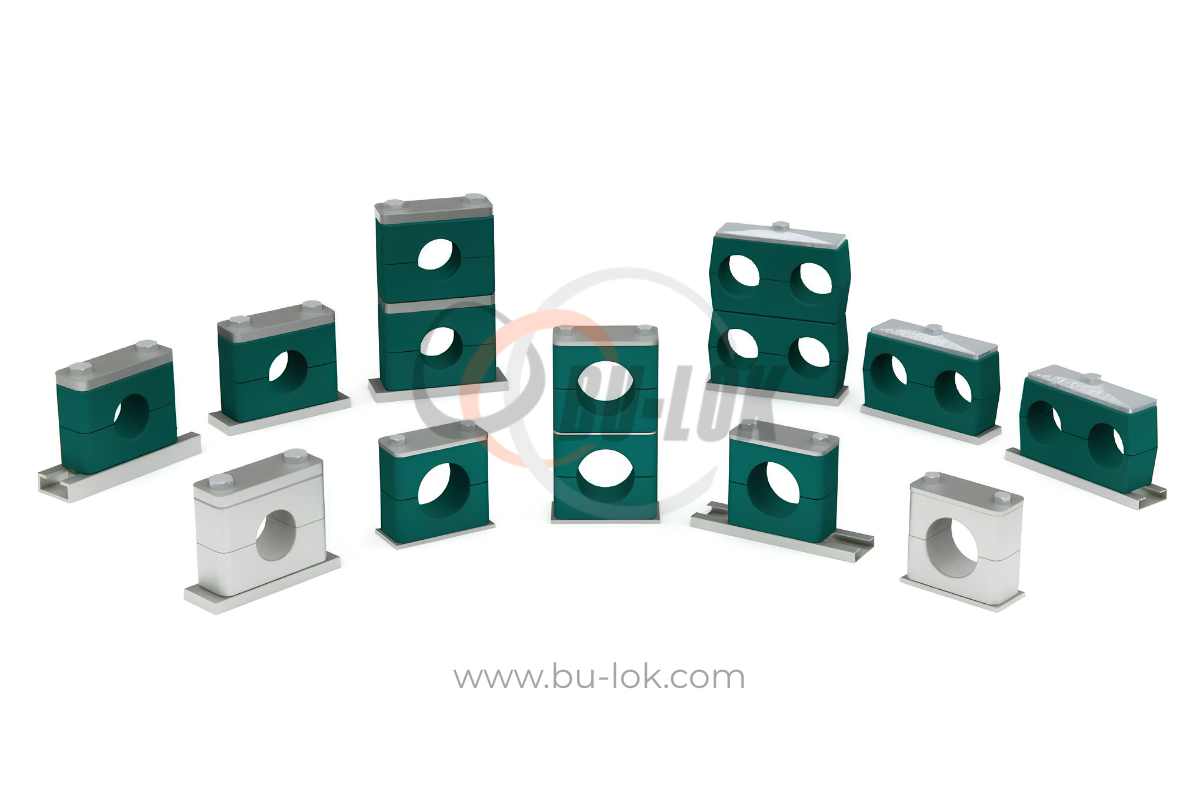
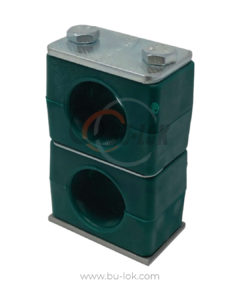
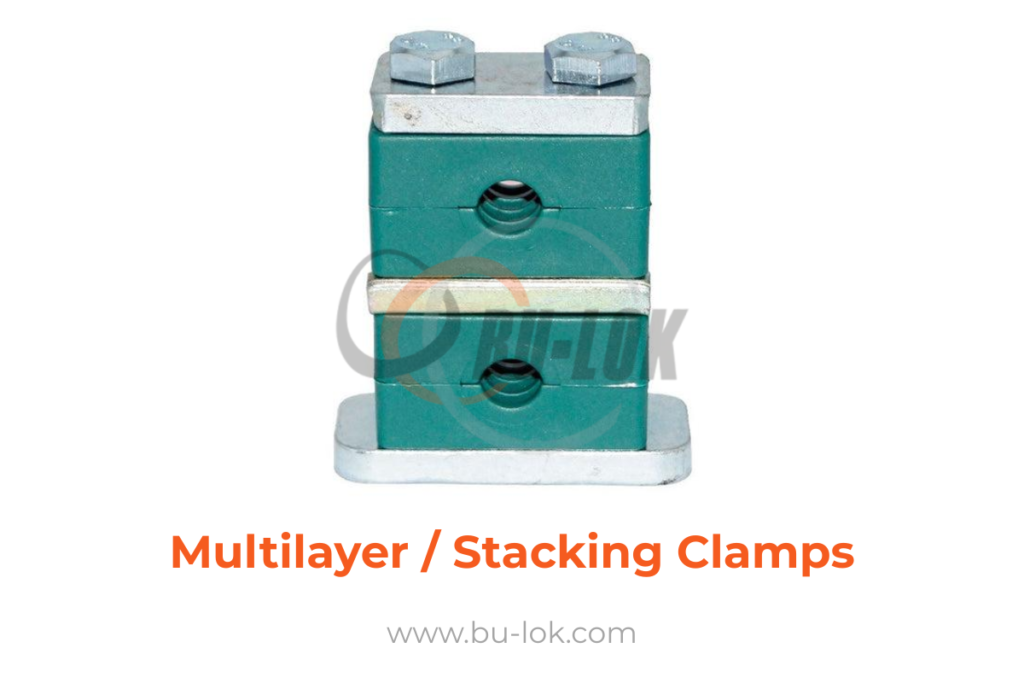
A multilayer pipe clamp — also called a stacking clamp or multi-row clamp — is an arrangement that holds several tubes stacked one above another on a single mounting point. Instead of fixing each line with its own separate clamp, an engineer builds a vertical stack: a base rail, several clamp layers, intermediate plates between them, and one long bolt running through the whole assembly to a top cover plate.
Each layer in the stack is a standard DIN 3015 clamp pair that grips its tube to full circumference. The intermediate plates separate and locate the layers, and the single stacking bolt clamps the entire column tight at once. The result is a tidy vertical tower of clamped lines occupying the footprint of just one clamp.
The purpose of a multilayer clamp is vertical space efficiency. Where many lines run in parallel — a dense hydraulic panel, a process skid, a control cabinet or a mobile-equipment manifold — stacking them vertically frees up valuable horizontal rail space, reduces the number of mounting points, and keeps a complex run organised and serviceable. Because it is built from standard DIN parts, a stack can be extended, reduced or reconfigured in the field.
Multilayer vs Twin vs Single Clamps: How They Differ
Bu-Lok offers three ways to handle multiple lines, and they solve different layout problems. Understanding the difference is the fastest route to the right configuration.
Configuration | How it routes lines | Best for |
Single clamp | One tube, one clamp body | Individual or widely spaced lines |
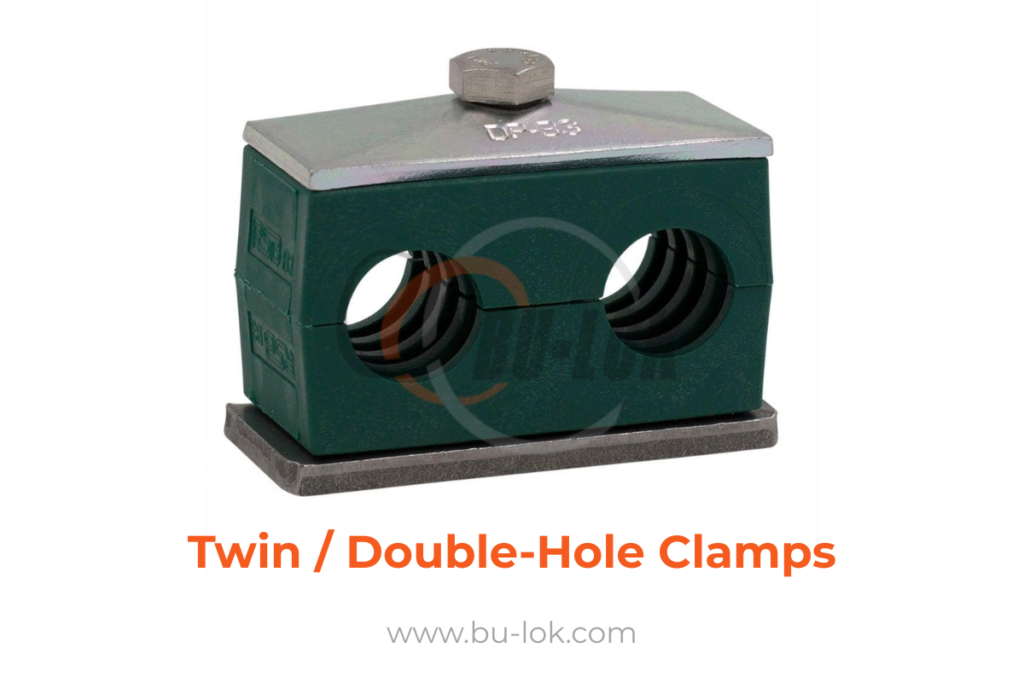
Twin / double clamp | Two tubes side by side (horizontal) | A parallel pair sharing one mounting point |
Multilayer / stacking | Many tubes stacked (vertical) on one bolt | Dense banks of many parallel lines |
In short: a twin clamp pairs two lines horizontally, while a multilayer clamp stacks many lines vertically. The two can be combined — twin clamps stacked into layers create a grid of lines, the densest possible arrangement, ideal for manifolds carrying a large number of tubes in minimal space.
How a Multilayer Stacking Clamp Is Built
A stacking assembly is built from standard, repeatable components, which is why it scales so easily:
- Base / weld rail or plate — anchors the whole stack to the structure.
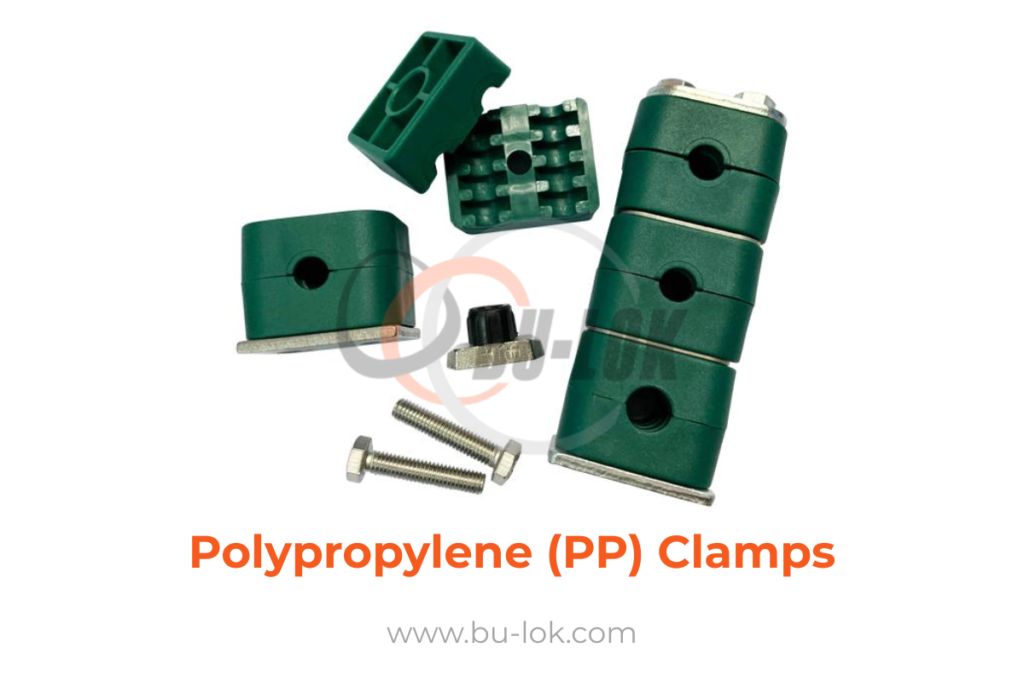
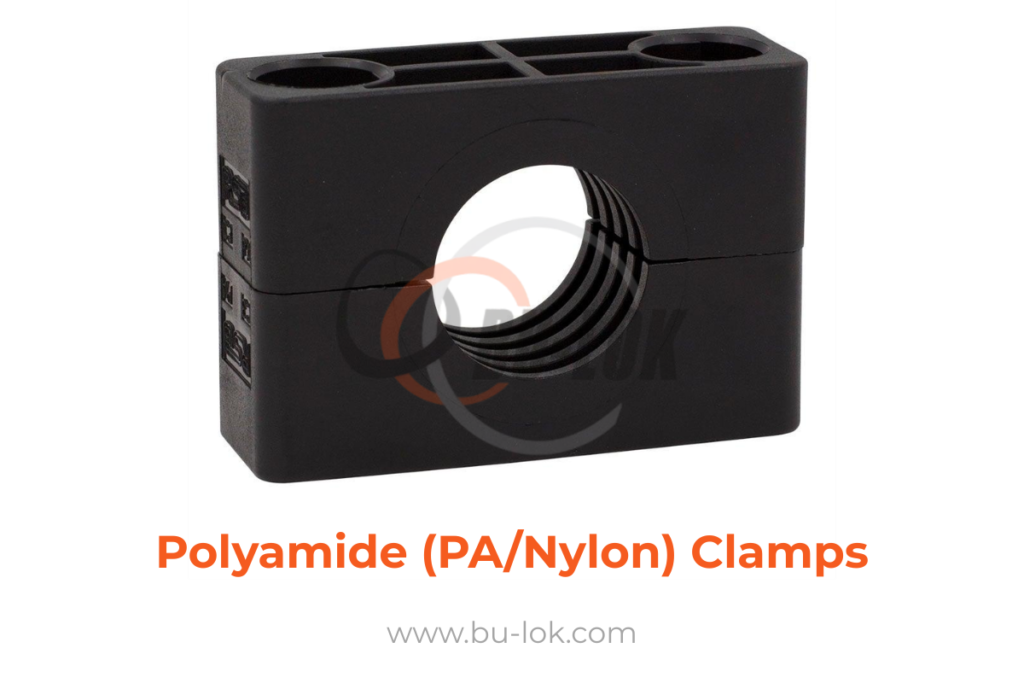
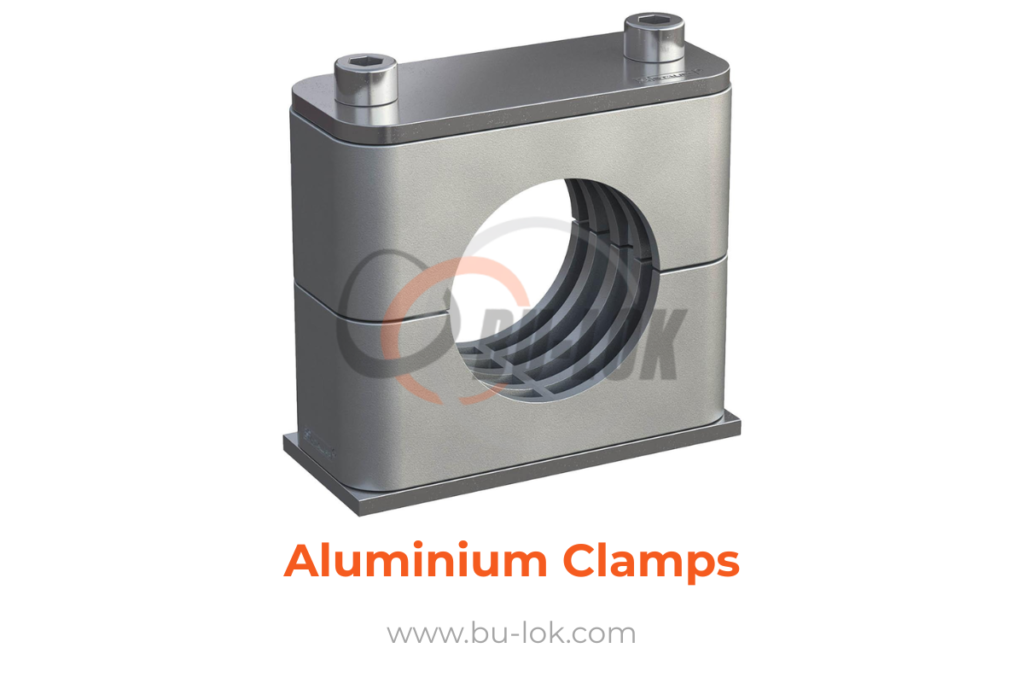
- Clamp halves (per layer) — standard DIN clamp pairs, one set per tube, in PP, PA or aluminium.
- Intermediate plates — sit between layers to separate and locate each row.
- Long stacking bolt — a single hex bolt sized to the stack height, running through every layer.
- Top cover plate — caps the stack and distributes the clamping load.
To add a line, you add a clamp layer, an intermediate plate and a longer bolt. To carry mixed tube sizes, each layer can take a different clamp group. This modularity means one stacking system covers everything from a two-layer pair to a tall multi-row bank.
Bu-Lok Multilayer Pipe Clamps at a Glance
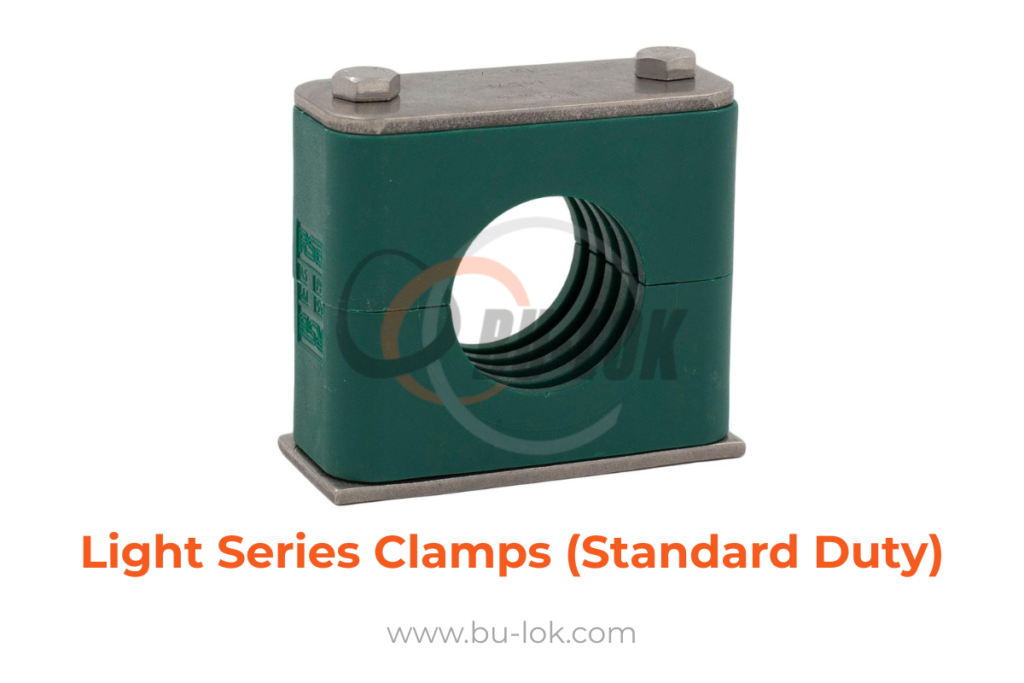
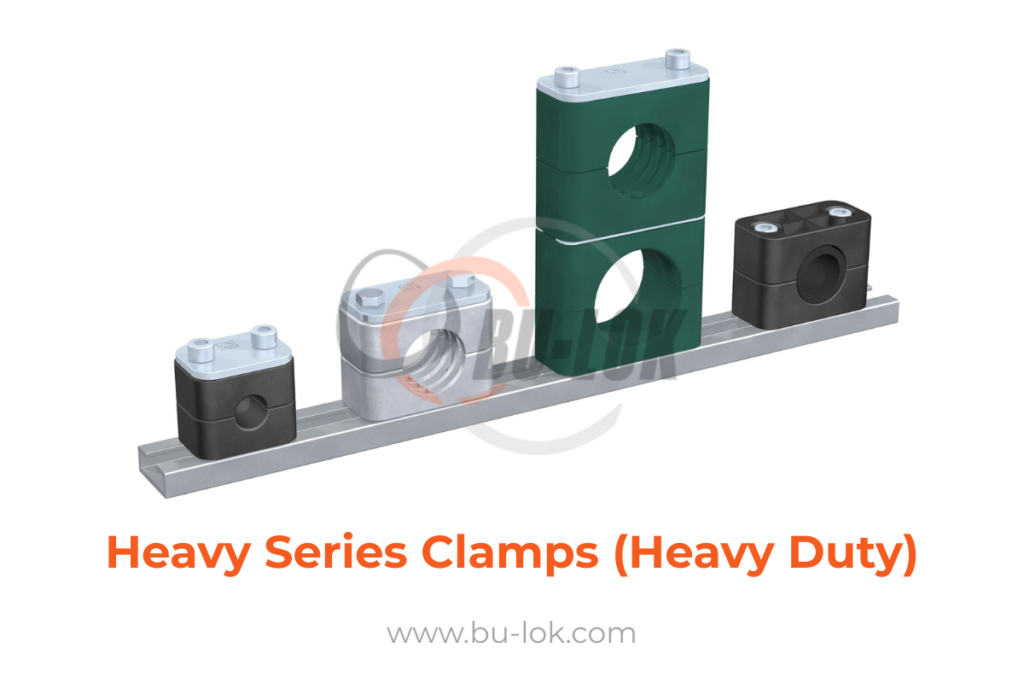
Bu-Lok builds stacking clamp assemblies from the full DIN 3015 range, so one supplier covers every multi-line position on your layout.
Specification | Bu-Lok Multilayer / Stacking Clamp |
Standard | DIN 3015 (Part 1 light, Part 2 heavy, Part 3 twin layers) |
Configuration | Multiple clamp layers stacked vertically on one bolt |
Layers | Two upward; configurable to tall multi-row banks |
Tube OD range (per layer) | 6 mm to 219 mm (1/4″ to 8″) |
Mixed sizes | Different tube size per layer supported |
Clamp body | Polypropylene (PP), Polyamide (PA), Aluminium |
Plates, rail & bolt | Mild steel (zinc / A3C) or Stainless Steel 304 / 316 |
Stacking bolt | Sized to stack height (longer per added layer) |
Equivalent to | STAUFF, Parker, Swagelok stacking systems |
Minimum order | 50 pieces / sets; bulk and custom volumes supported |
Built to DIN tolerances, Bu-Lok stacking components are interchangeable with imported systems and mix freely with single and twin clamps on the same rail.
Why Use Multilayer Pipe Clamps?
Stacking clamps earn their place wherever many lines must be routed in limited space:
- Vertical space saving — they free horizontal rail and panel space by building upward instead of sideways.
- Fewer mounting points — one rail and one bolt per stack replace many individual fixings, cutting drilling and welding.
- Faster installation — a whole bank of lines is clamped with a single fastener per stack.
- Organised, serviceable runs — lines are held at fixed, repeatable spacing, so a dense manifold stays tidy and easy to trace.
- Modular and expandable — add or remove layers in the field as the system grows or changes.
- Mixed sizes and materials — each layer can carry a different tube size or body material to suit the line it holds.
Industries and Applications
Multilayer clamps are specified wherever line density is high and space is tight. Bu-Lok stacking clamps are used across:
- Hydraulic power units and panels — banks of pressure, return and pilot lines stacked in minimal space.
- Process and packaged skids — dense, organised routing of many process and utility lines.
- Mobile, mining and construction equipment — multi-line hydraulic manifolds where panel space is scarce.
- Control cabinets and automation — neat vertical management of many sensing, signal and air lines.
- Machine tools — tidy stacking of hydraulic and pneumatic lines on machine frames.
- Marine and offshore systems — stainless stacking assemblies for multi-line runs in salt air.
Test rigs and manifolds — high-density line arrangements that must remain accessible for service.
How Multilayer Clamps Are Installed
A stacking assembly installs in a logical bottom-up sequence:
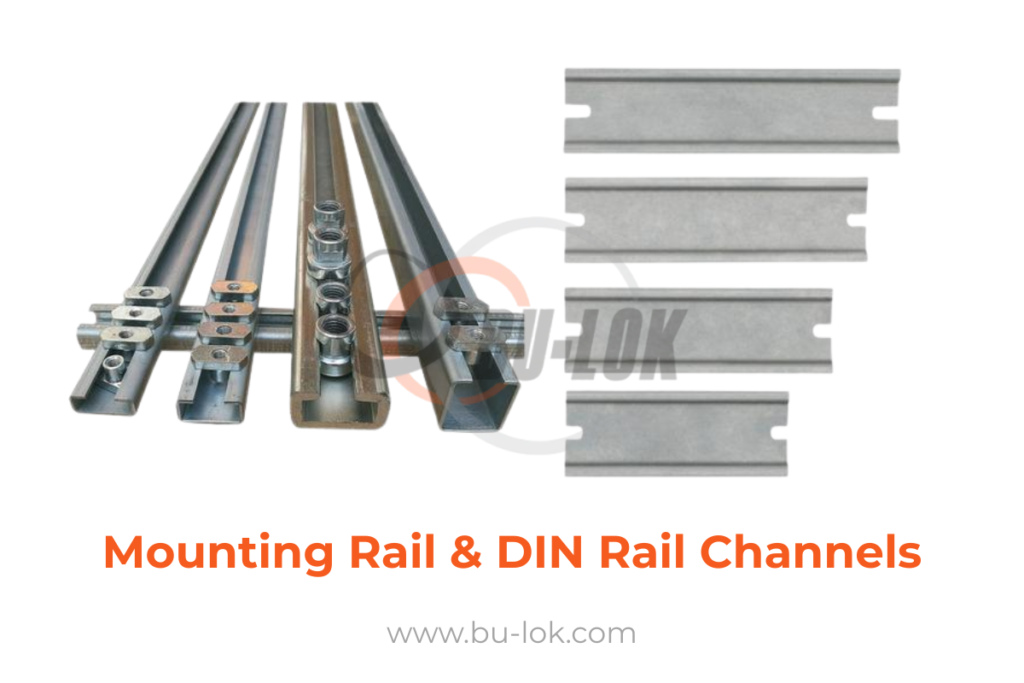
- Fix the base rail or plate to the structure by welding, bolting, or onto a DIN mounting rail for a weld-free build.
- Fit the first clamp layer — seat the tube in the lower half and add the upper half.
- Add an intermediate plate, then the next clamp layer and its tube, repeating for each row.
- Cap with the top cover plate and run the long stacking bolt through the whole column into the base.
- Tighten once to clamp every layer simultaneously, then space the stacks along the run at the recommended interval to prevent sag and resonance.
Because the bolt length sets the number of layers, planning the stack height and bolt size up front makes assembly quick and repeatable across the whole installation.
Why Choose Bu-Lok for Multilayer Pipe Clamps
Bu-Lok delivers imported-grade stacking clamp quality, manufactured in India, at a competitive price and short lead time.
- Complete stacking systems — rails, clamp layers, intermediate plates, cover plates and stacking bolts, all to DIN 3015.
- True import equivalents — interchangeable with STAUFF, Parker and Swagelok stacking systems, with no redesign.
- Mixed configurations — different tube sizes and body materials per layer, and twin-plus-stack grids for maximum density.
- In-house manufacturing control — consistent DIN tolerances, material certificates and batch traceability.
- Stainless 304 / 316 capability — for marine, offshore and chemical multi-line runs most local suppliers cannot serve.
- Global export and engineering support — supplying the Middle East, Europe, Africa and Southeast Asia, with help configuring stacks, bolt lengths and layouts.
When your layout has more lines than space, Bu-Lok’s multilayer clamps keep the run compact, organised and on schedule.