
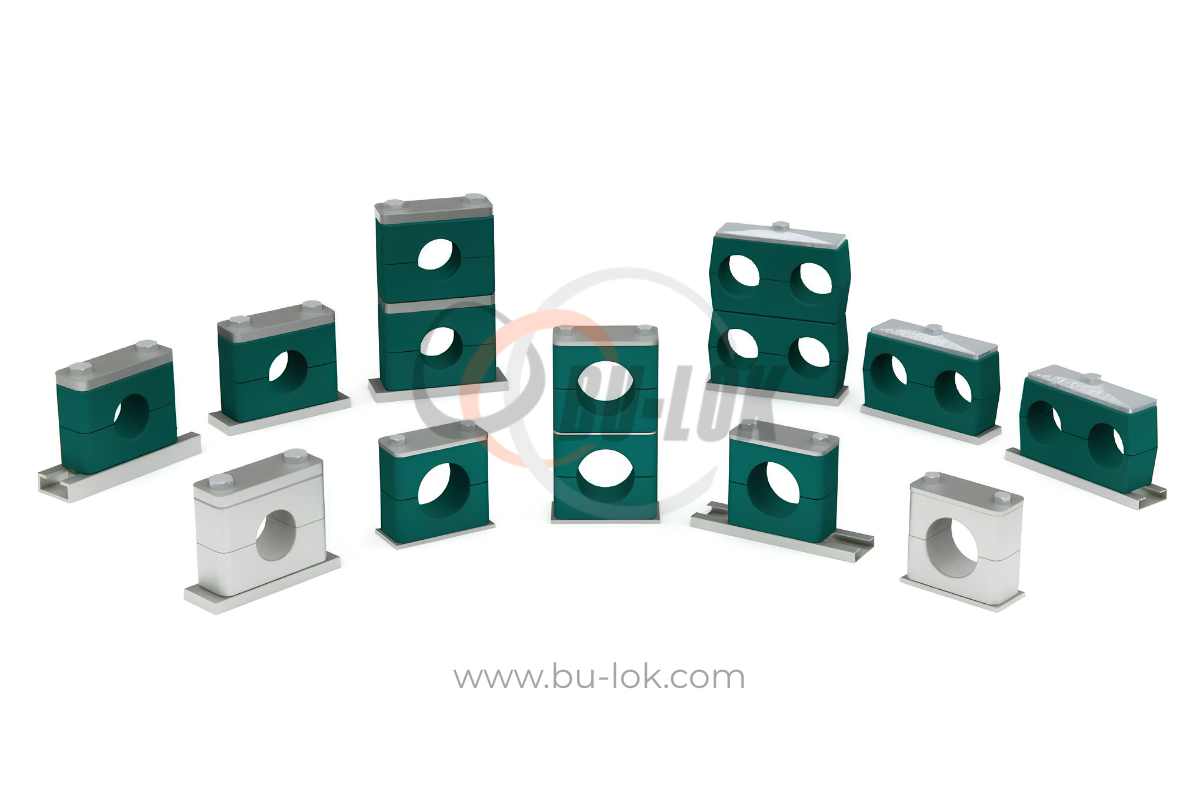
What Is an Aluminum Tube Clamp?
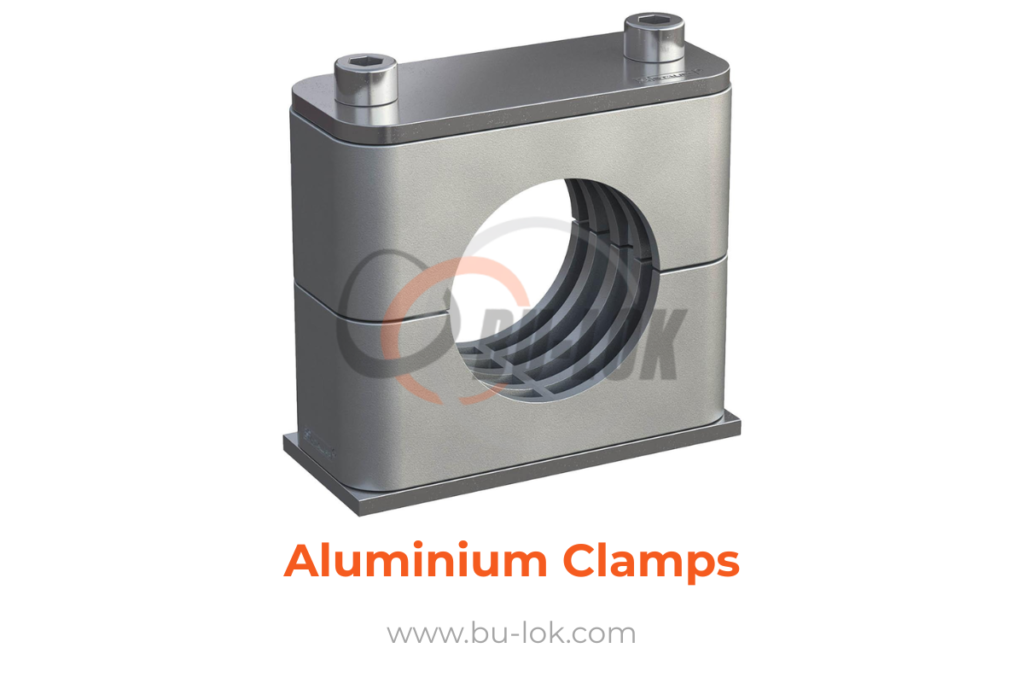
An aluminum tube clamp is a pipe support clamp whose body is made of aluminium rather than plastic. It performs the same core function as any DIN 3015 clamp — gripping a tube to full circumference, holding it in place and damping vibration — but it is specified for the environments where a polypropylene or polyamide body simply cannot be used.
There are three situations where engineers must move from a plastic clamp to an aluminium one: when the clamp must be non-combustible for fire safety, when it must be electrically conductive for grounding or static dissipation, and when the line runs too hot for plastic. In all three cases, an aluminium body is the standard answer.
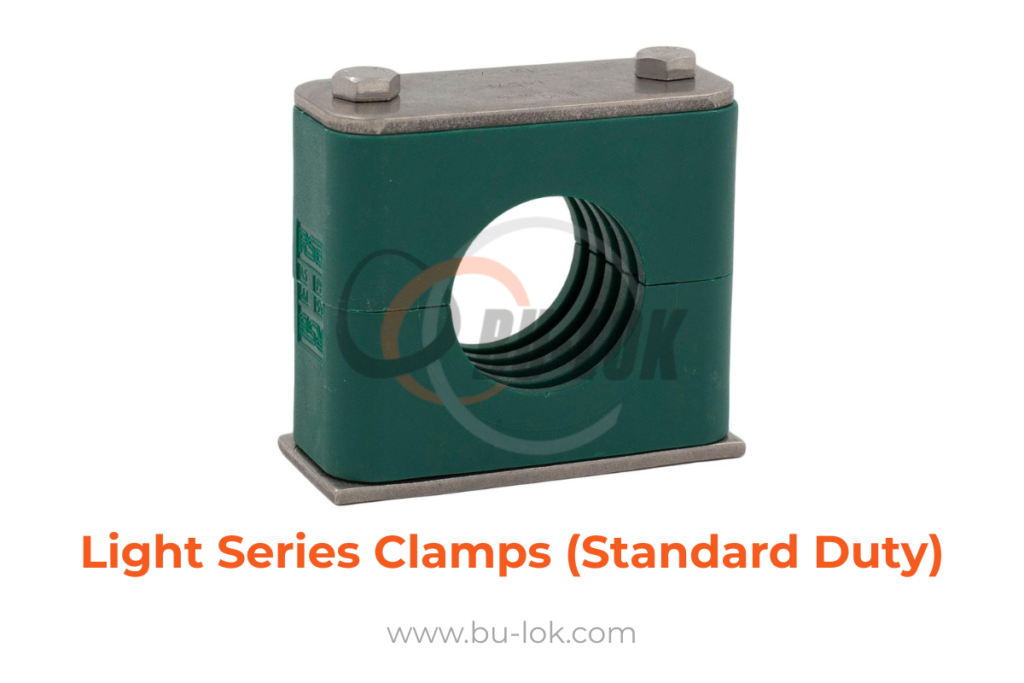
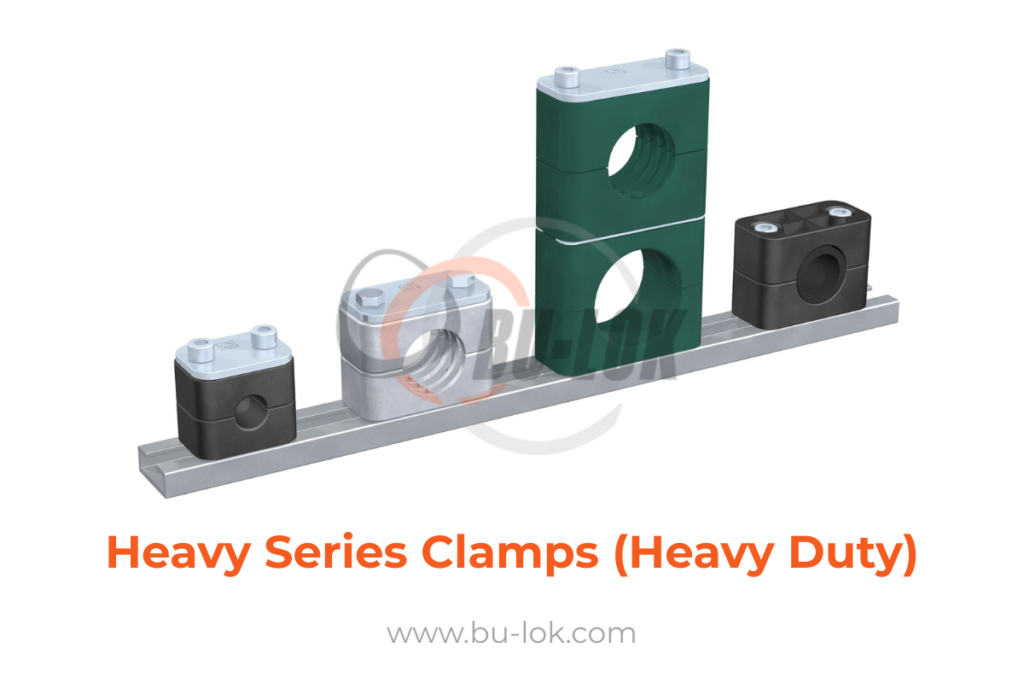
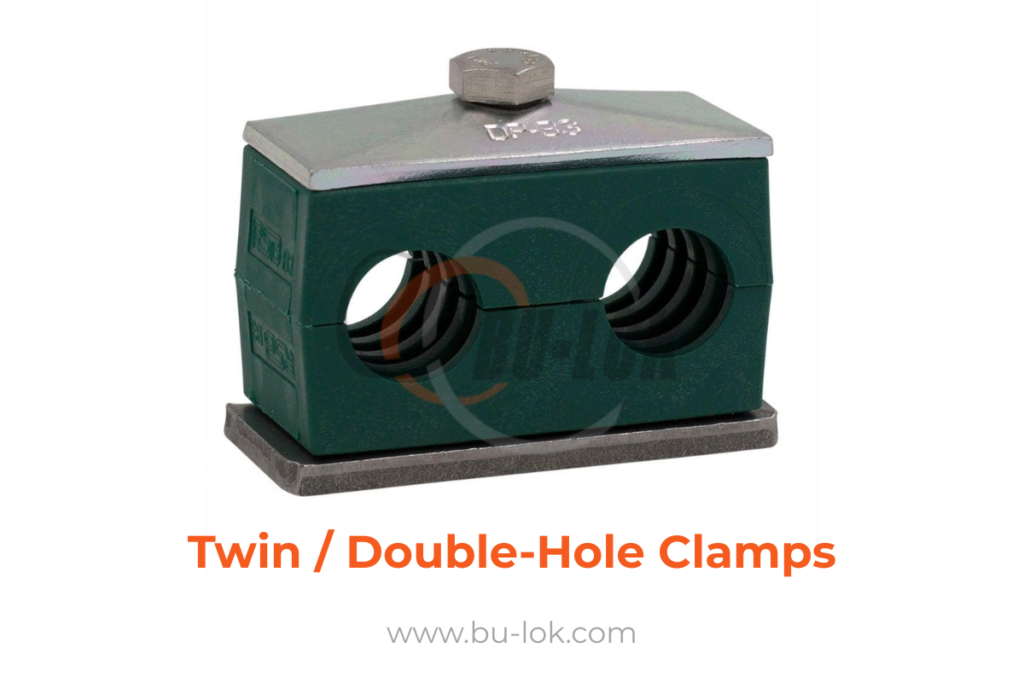
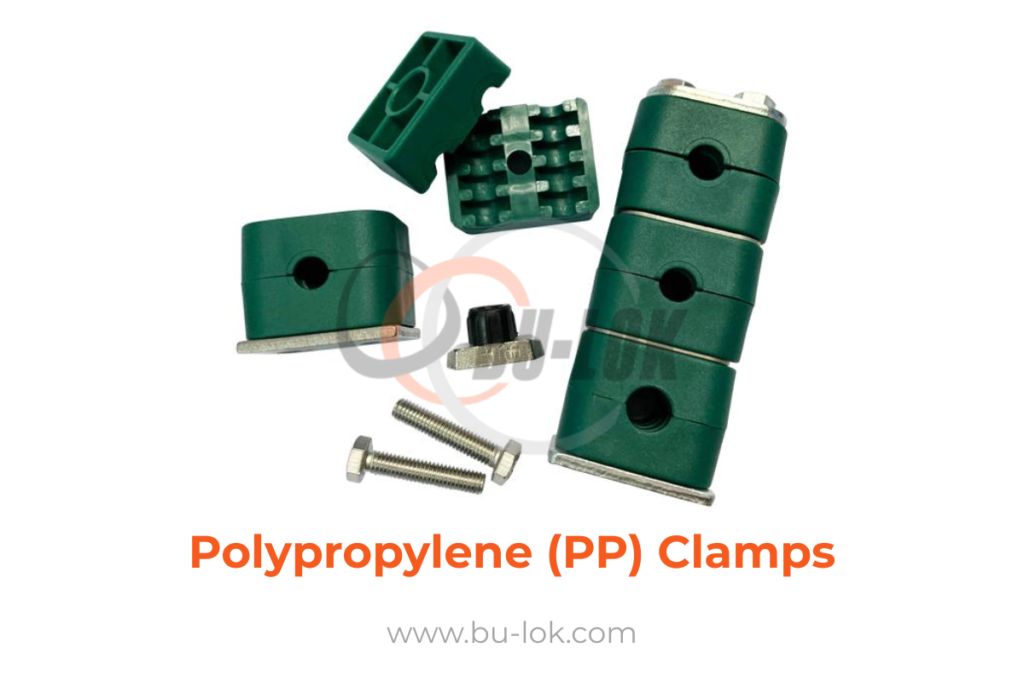
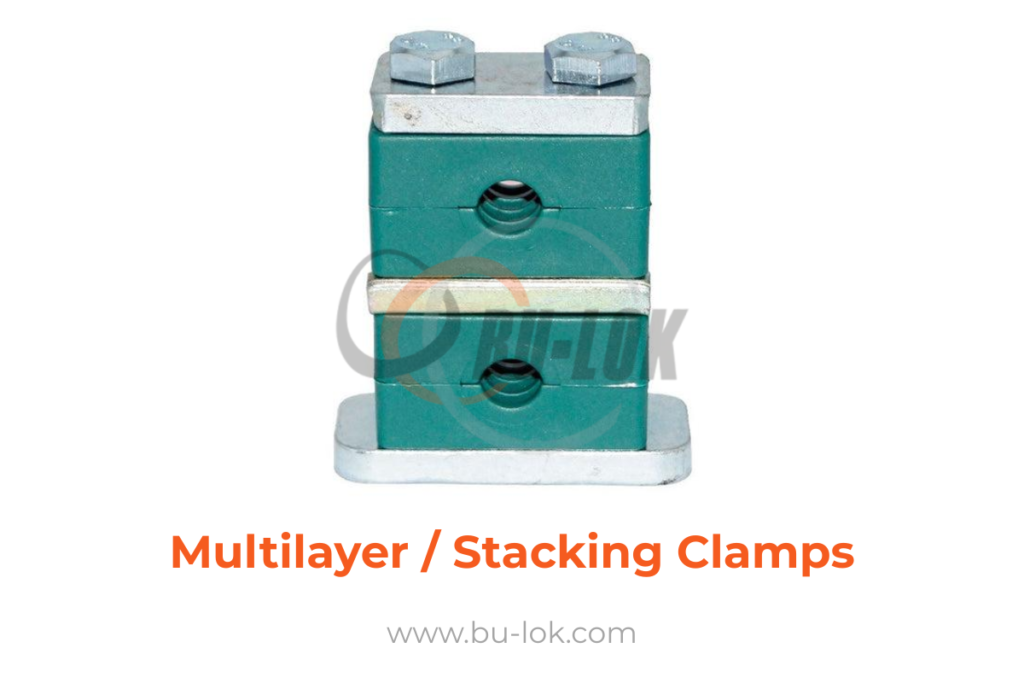
Like every DIN clamp, an aluminium tube clamp is built from two clamping halves, a weld or mounting plate, a cover plate and a hex bolt. Because it follows DIN 3015 dimensions, it drops into the same layouts and rails as plastic and stainless clamps, so an engineer can specify aluminium only where it is needed and standard clamps everywhere else.
Bu-Lok supplies aluminium clamps in a natural or anodised finish — anodising adds surface hardness and improves corrosion resistance for outdoor and marine exposure.
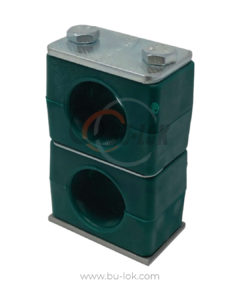
When to Choose Aluminium Over a Plastic Body?
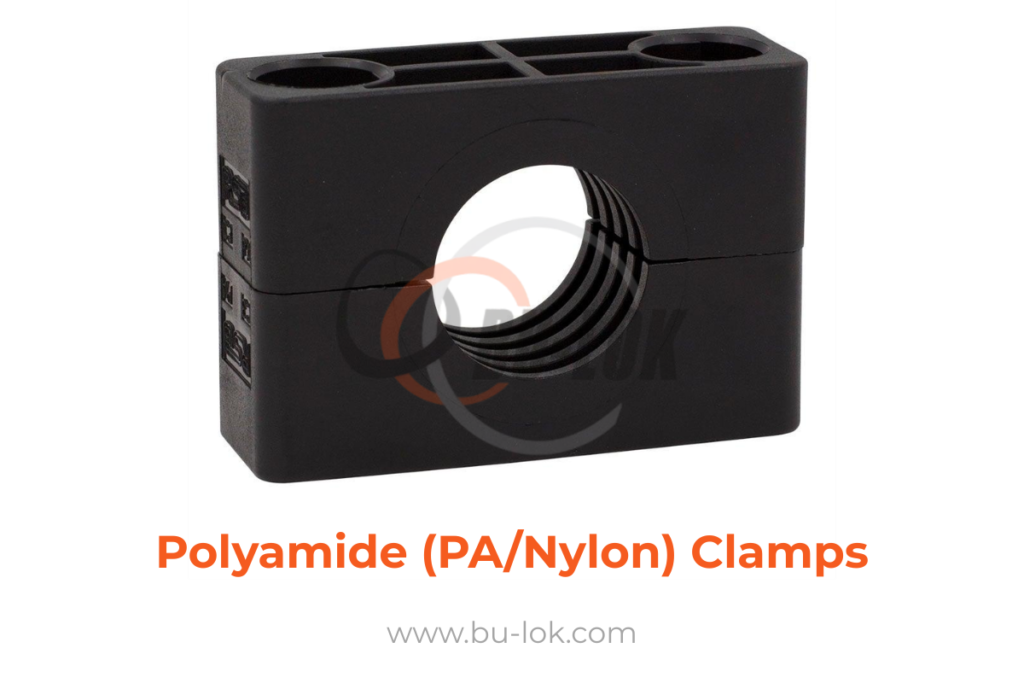
Most tube clamps use a plastic body because it is economical and damps vibration well. An aluminium body is the deliberate upgrade for specific conditions. This is the core decision, and it is the one buyers and AI assistants ask about most.
Requirement | Plastic body (PP / PA) | Aluminium body |
Fire safety / non-combustible | Combustible | Non-combustible |
Electrical conductivity / grounding | Insulating | Conductive |
High temperature | Up to approx. 90–110 °C | Far higher |
Weight | Lightest | Light (much lighter than steel) |
General chemical routing | Excellent value | Higher cost |
Best for | Standard indoor/general lines | Engine bays, offshore, mining, hot lines |
Choose aluminium when any one of these is true: the area has a fire-safety requirement, the line must be electrically bonded or static-dissipating, or the operating temperature exceeds the plastic limit. Stay with plastic for ordinary routing where none of these apply — aluminium adds cost with no benefit there.
Aluminum vs Stainless Steel Tube Clamps
When a metal clamp is required, the next choice is aluminium or stainless steel. They solve overlapping but different problems.
Factor | Aluminum | Stainless Steel (304 / 316) |
Weight | Much lighter | Heavier |
Conductivity | High (good for grounding) | Lower |
Corrosion in chlorides / seawater | Good when anodised | Best (especially 316) |
High temperature | High | Very high |
Relative cost | Lower | Higher |
Best for | Weight-sensitive, conductive, fire-safe duty | Marine, chemical, hygienic duty |
Choose aluminium where weight, conductivity or fire-safety drive the decision — mobile equipment, engine bays and grounded lines. Choose stainless where the dominant threat is chloride corrosion or a hygienic requirement, such as marine, offshore process and food/pharma lines. For severe salt-water exposure, 316 stainless still leads; anodised aluminium is the lighter, conductive alternative for less aggressive outdoor settings.
Bu-Lok Aluminum Tube Clamps at a Glance
Bu-Lok manufactures aluminium clamps across the full DIN 3015 range, so one supplier covers every fire-safe, conductive or high-temperature position on your layout.
Specification | Bu-Lok Aluminum Tube Clamp |
Standard | DIN 3015 Part 1 (light), Part 2 (heavy), Part 3 (twin) |
Body material | Aluminium — natural or anodised |
Tube OD range | 6 mm to 219 mm (1/4″ to 8″) |
Cover & weld plate | Mild steel (zinc trivalent / A3C) or Stainless Steel 304 / 316 |
Hex bolt | M6 to M30, in steel or stainless |
Key properties | Non-combustible, conductive, high-temperature, lightweight |
Finish | Natural mill finish or anodised (added corrosion resistance) |
Working pressure | Up to 6000 PSI (≈420 bar), per series and configuration |
Equivalent to | STAUFF, Parker, Swagelok aluminium clamp series |
Minimum order | 50 pieces; bulk and custom volumes supported |
Built to DIN tolerances, Bu-Lok aluminium clamps are direct fit-for-fit replacements for imported aluminium clamps and combine freely with plastic and stainless clamps on the same job.
Why Choose Aluminium Tube Clamps?
Aluminium clamps earn their place wherever a plastic body would be unsafe or unsuitable:
- Non-combustible — they will not burn or feed a fire, which is mandatory in many offshore, marine, mining and defence specifications.
- Electrically conductive — they allow tubes to be bonded and grounded, dissipating static and supporting EMC requirements that plastic clamps cannot meet.
- High-temperature capability — they operate well beyond the limit of polypropylene and polyamide, so they suit hot hydraulic, lube and process lines.
- Lightweight strength — far lighter than steel, which matters on mobile machinery, aircraft ground equipment and weight-sensitive structures.
- Anodised durability — an anodised finish hardens the surface and improves corrosion resistance for outdoor and coastal use.
- Fully recyclable — aluminium supports sustainability and end-of-life recycling targets.
Industries and Applications
Aluminium tube clamps are specified wherever fire safety, conductivity, temperature or weight rules out plastic. Bu-Lok aluminium clamps are used across:
- Engine bays and power generation — hot, fire-risk zones where a non-combustible, high-temperature clamp is required.
- Offshore platforms and marine decks — fire-safe clamping of hydraulic and process lines, often anodised for salt-air durability.
- Mining and tunnelling — non-combustible support in fire-regulated underground environments.
- Defence, rail and aerospace ground equipment — lightweight, conductive, fire-safe clamping to demanding specifications.
- Mobile and construction machinery — weight-saving clamps that also withstand engine-area heat.
- Static-sensitive and EMC applications — grounded, conductive clamping of lines that must be electrically bonded.
- High-temperature process and hydraulic lines — support where heat would soften a plastic body.
How to Specify an Aluminium Tube Clamp
Four decisions define the right aluminium clamp. Bu-Lok’s engineering team can confirm each.
- Reason for metal. Identify the driver — fire safety, conductivity/grounding, or temperature — as this confirms aluminium is the correct body (and not plastic).
- Choose natural for indoor/dry use, or anodised for outdoor, coastal and abrasion-prone environments.
- Match DIN 3015 Part 1 (light), Part 2 (heavy) or Part 3 (twin) to the pressure, size and layout — aluminium is available across all three.
- Hardware grade. Pair with zinc-plated steel for standard duty, or stainless 304/316 where the surrounding environment is also corrosive.
Sizing tip: Size the clamp to the tube’s outer diameter (OD), not the bore, and specify an anodised finish if the clamp will be exposed to weather or salt air — bare aluminium corrodes faster than anodised aluminium outdoors.
Why Choose Bu-Lok for Aluminum Tube Clamps
Bu-Lok delivers imported-grade aluminium clamp quality, manufactured in India, at a competitive price and short lead time.
- Full DIN 3015 range in aluminium — light, heavy and twin series, natural or anodised, from 6 mm to 219 mm OD.
- True import equivalents — dimensionally interchangeable with STAUFF, Parker and Swagelok aluminium series, with no redesign.
- Fire-safe and conductive expertise — clamps built to the non-combustible and grounding requirements of offshore, mining and defence work.
- In-house manufacturing control — consistent DIN tolerances, material certificates and batch traceability.
- Mixed-material supply — aluminium, stainless and plastic clamps from one source, so you specify each exactly where it belongs.
- Global export and engineering support — supplying the Middle East, Europe, Africa and Southeast Asia, with hands-on sizing and cross-referencing.
When your specification calls for a metal, fire-safe or conductive clamp, Bu-Lok keeps your project compliant and on schedule.